

Rooted in ancient universal traditions, mindfulness has become a cornerstone of modern psychotherapy, offering individuals and professionals the tools to cultivate presence, self-awareness and connections. Now more than ever when stress, anxiety, and trauma seem to be ever-present, mindfulness has emerged as a powerful practice that goes beyond relaxation techniques to become a way of being.
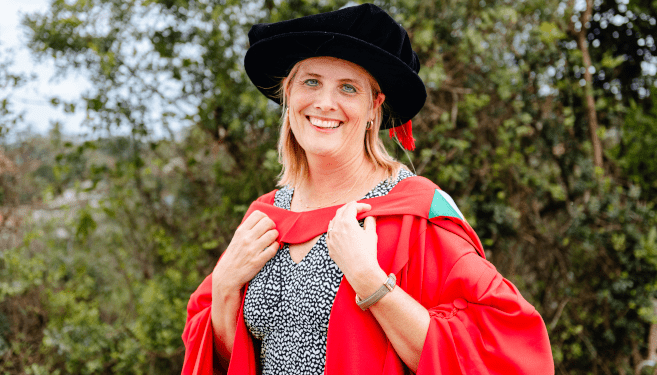
What happens when mindfulness is used by those tasked with helping others heal? This question was central to Dr Ciara Korving’s PhD thesis titled, “The Experience of Being: An Interpretative Phenomenological Study on the Meditative ‘Being’ Qualities, as Experienced by Counselling Psychologists in Therapeutic Practice”. Her ground-breaking research explores how mindfulness, when practiced by counselling psychologists, transforms the therapeutic environment and enhances their work with clients.
Supervised by Dr Nicholas Munro, Korving’s study delved into the profound impact of mindfulness meditation on key therapeutic capacities and its broader potential in trauma therapy and multicultural counselling settings. Her findings provide strong evidence to support the integration of mindfulness practices into psychology training curricula, both locally and internationally.
Korving’s interest in the meditative “being” qualities of mindfulness grew from increasing recognition of mindfulness-based psychotherapy in the psychological community. However, she observed a gap in research on how long-term mindfulness practices could affect the therapeutic relationship.
‘Given the central role that counselling psychologists assign the therapeutic relationship as an avenue for change, I wanted to investigate their experiences of mindfulness and meditative practice, in an attempt to better understand its perceived relevance for counselling psychology.’
Korving employed Interpretative Phenomenological Analysis (IPA) to explore counselling psychologists’ subjective experiences and their use of mindfulness in therapy. ‘IPA is concerned with exploring people’s lived experiences and the meanings they attach to them. It enabled me to capture the depth and nuance of mindfulness in therapeutic settings and revealed how it influences the “being” qualities of therapists, fostering stronger connections with clients.’
Korving’s research revealed that mindfulness enhances key therapeutic capacities such as presence, self-awareness, and attention, which significantly improve the therapeutic environment. Participants consistently reported that mindfulness helped them be more fully present with clients, improving their attentiveness and ability to engage deeply in therapeutic conversations, both verbal and non-verbal. This fostered heightened awareness, a non-judgmental attitude and improved focus. Therapists added they were able to pay full attention to the present moment. They also noted that mindfulness was particularly effective in helping release trauma stored in the body, offering a valuable approach to addressing maladaptive defence mechanisms such as repression that are often triggered by trauma.
An unexpected insight from the study was that, rather than offering a psychological framework with which to conceptualise human behaviour, a mindfulness approach was experienced by participants as fostering a way of being in the therapeutic space.
‘The findings suggest that mindfulness and its practice pertains to human states of connection. Mindfulness was conveyed as a restorative practice and one of reconnection with the self, with others and with the moment,’ she noted.
The study identified several ways in which mindfulness and its practice offer value in therapeutic settings – first, its relevance as a multi-cultural approach to healing; second, its value as a means of addressing psychological defence mechanisms that often present in the therapeutic space; and thirdly, its value in the counselling psychology curriculum, both in South Africa and internationally in providing trainee counselling psychologists with a more holistic offering.
She thanked UKZN for affording her the opportunity to conduct the study; the research participants for engaging with the topic and sharing their time, experiences and insights; her family and friends for their support and her supervisor for guidance and input.