

In an effort to place a strong emphasis on mending the damage that conflict, crime, and violence have inflicted in today’s society, UKZN recently hosted a first-class online colloquium, in collaboration with the South African Coalition for Restorative Justice (SACRJ), to commemorate International Restorative Justice Week (19-25 November 2023).
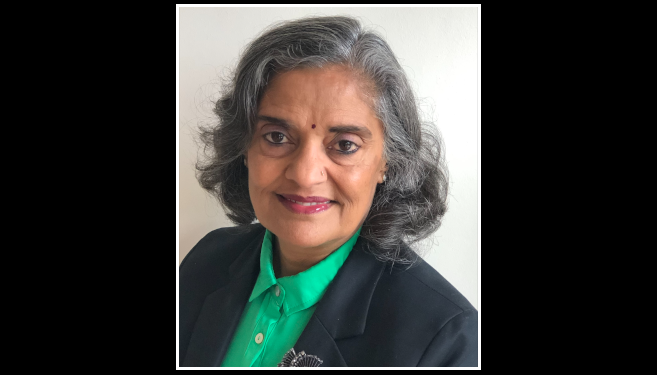
The event was facilitated by UKZN senior lecturer in Community Development in the School of Built Environment and Development Studies, Dr Hema Hargovan, whose research interests lie in the disciplines of law, criminal justice, social justice, criminology, and victimology. The colloquium explored the significance of restorative justice and its transformative potential.
Hargovan, in her introduction, said in the context of current geo-political tensions, the climate crises and human rights abuses throughout the world, dialogues, mediation, and peace-making, using a restorative justice lens, is more relevant than ever. Therefore, the aim of this third annual colloquium was to explore how restorative justice can positively influence all dimensions of society. Apart from promoting restorative justice’s transformative potential in resolving systemic concerns and advancing social justice, the event investigated the role that restorative justice plays in a variety of ecosystems, emphasising how it affects communities, workplaces, legal systems, and educational institutions while promoting meaningful discourse and shared accountability. She concluded that globally, restorative justice as a social justice movement has the potential to be a movement for social change.
Professor Ernest Khalema, Dean and Head of the School of Built Environment and Development Studies, delivered the welcome address and noted the significance of being a post-apartheid university that places a high value on education, offering safe environments for tough conversations in order to improve the experiences of its students and the communities it serves.
He said, ‘The world is in turmoil, it is crucial to acknowledge the brokenness and recognise our roles as practitioners, knowledge holders, and activists. It is time to connect and positively impact the world as UKZN prides itself on being the most transformed university in the country.’
The keynote address was presented by Ms Tamara Höfer, an expert in penal reform. She utilises an evidence-based approach to inform national and international prison research and strategy for the United Nations Office on Drugs and Crime and His Majesty’s Prison Service in England and Wales. Her presentation highlighted her experiences as a prison officer where she worked with vulnerable individuals, recognising the need for social integration. It was during her research to seek innovative solutions to reduce reoffending that she came across Khulisa’s initiatives in Alexandra, Gauteng, South Africa. She argued that prisons can unlock potential and transform lives, and that social integration should start before prison. Furthermore, communities and schools should be a starting point for holistic and multidisciplinary approaches. Höfer stressed that a new mindset and focus on community engagement is needed, including supportive prisons, societal trust, and welcoming individuals back after their sentences are crucial for achieving desired outcomes.
Ms Lesley Ann van Selm from Khulisa Social Solutions, together with Mr Africa Monyai, a researcher, and Mr Christopher Ndlovu from the Thusong Youth Centre, an NGO in Alexandra, reflected on Khulisa’s Alexandra Peace Building Programme in Gauteng. Her well-researched presentation: Community Development through Restorative Justice: It’s All About Participation and Partnerships presented evidence-based research on how the Alexandra Peace Making Programme is aimed at addressing social vulnerabilities and inequalities in South Africa by supporting community-level initiatives that inspire, empower, and enable vulnerable children, youth, and the community, she then went onto highlighting the potential and impact of restorative justice approaches in various ecosystems that can bring about impactful social change.
Ms Eleanor Tack trained with the Society of Mediators. Tack has previously explored the role of mediation as a means to address gang violence, with a particular focus on Cape Town and Freetown, Sierra Leone. She has spent time representing Xhosa communities on the Wild Coast during mediations with local authorities whilst working with Attorneys in Johannesburg. Her presentation looked at mediation as a tool for peace building, stating that the goal of community mediation is to support participants in hearing one another, not to solve problems. Tack suggests that violence is a result of self-deception.
Mr Mike Batley from the Restorative Justice Centre and a member of SACRJ, outlined the vision and goals of SACRJ. An interesting and lively interactive Q and A session followed. The panel comprised of guest speakers (Ms Tamara Höfer and Ms Eleanor Tack), as well as members of SACRJ, Dr Hema Hargovan (UKZN), Ms Lesly Ann van Selm (Khulisa), Ms Lisa Harries (RESTORE), Ms Venessa Padayachee (MIDWAY), and Mr Mike Batley (RJC).
Click on the link to watch: https://www.youtube.com/live/uYEq18_wkes?si=sRb1KxyYElKtQyZ3